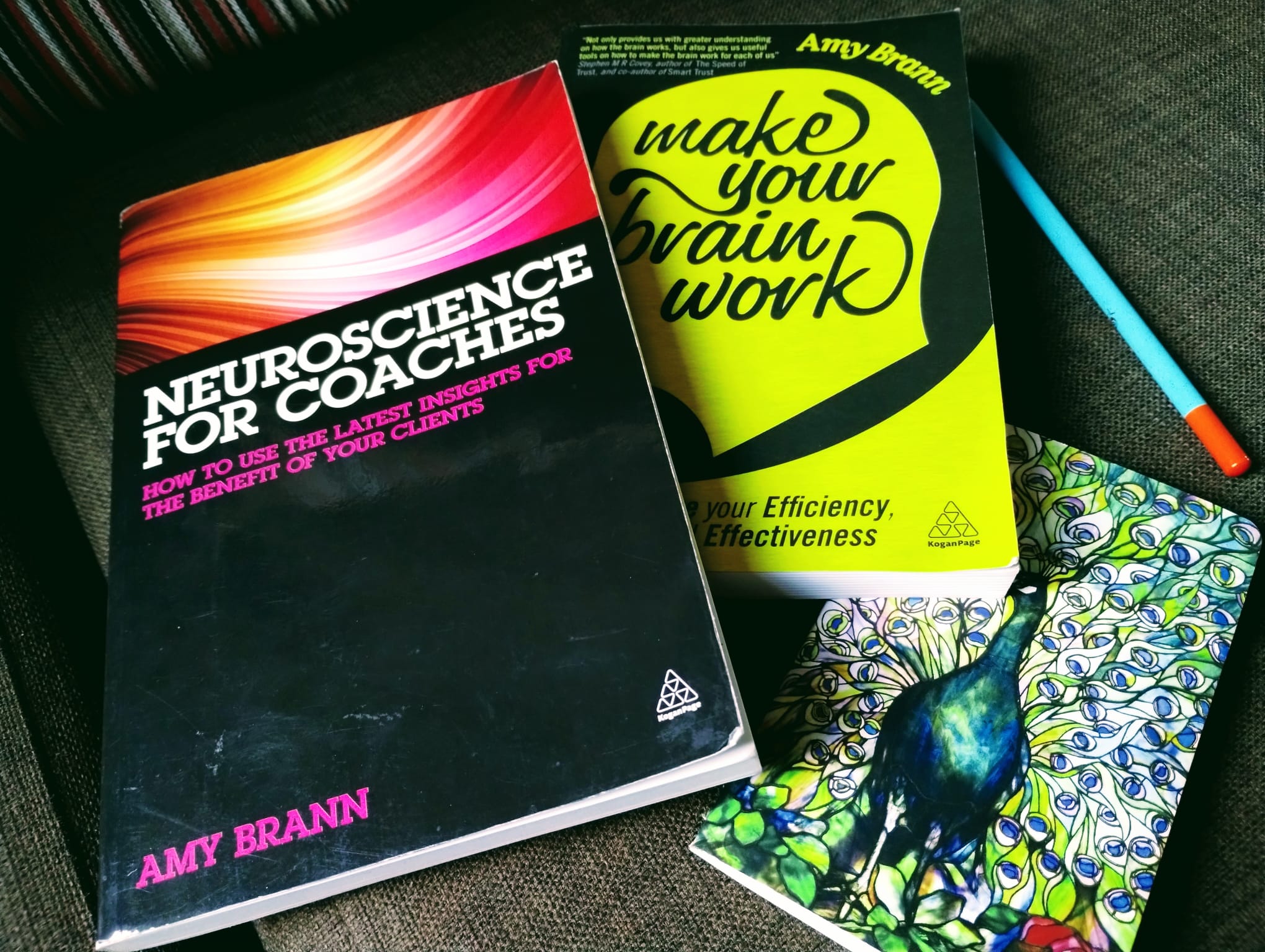

Last week I blogged about how to start gathering the beginnings of a coaching library and talked a bit about where to find inspiration and what books I would recommend for anyone starting out.
To continue on this theme I thought I’d write a review of one of the books that I’ve found myself coming back to time and time again, share what brought me to it, what I value in it and what things you might want to bear in mind before you stump up your hard earned to buy a copy*.
When I started out on my journey to become a coach I was intrigued by the underpinnings behind the coaching approach. How does it work? Why does it work? As an employee of the Intellectual property office (the artist formally known as The Patent Office) I am a, and am surrounded by, scientists who have been trained yet further in critical thinking. If you start making bold statements about how coaching can change people’s ways of thinking (indeed, of how it can be used to help rewire their brains) – you need to be able to point to the evidence behind your approach. Assertion won’t get you very far.
Unfortunately, I found that some coaching books and trainers were sketchy, or even inaccurate on the foundational principles behind the work we do. There are a frightening number of neuromyths that have wormed their way into the public conscience and so it is against this backdrop that Amy’s slender, but absolutely crammed, textbook should really be essential reading for any coach who wants to really understand why the things they’re practising work (and to ensure that they’re not peddling snake oil).
Amy Brann started out studying medicine at UCL before pivoting and deep diving into coaching. With thousands of hours of coaching practice under her belt she really knows the interventions that work and the practical relevance of the theory she so adroitly distils.
I’d recently bought a copy of her book when I was lucky enough to be able to see her talk on the topic at the Academi Wales summer school in 2015. (My quick research to double check on the year led me to find the video of that talk is still available here and well worth a watch, as she’s an engaging speaker)
While not shying away from all the technical terminology, the book is genuinely accessible. It approaches the topic by looking at each of the areas of the brain, explaining what each part does, the relevance of that area of the brain to coaching, and how you can use that in your coaching practice. Each chapter is broken down into punchy sections which reward revisiting when reflecting on your coaching practice, or when preparing to work with a coachee with whom you are zooming in on a particular issue. Always wanted to know what the difference is between your striatum and your amygdala? This is a great, practical book to lift the lid. (The referencing in the book is also excellent for any deeper dives you fancy pursuing as a result).
The book then moves on to a survey of different chemicals in the body and their interactions with the brain. We’ve all heard of one or more of the following : Cortisol, dopamine, oxytocin, adrenaline, serotonin. The book once again guides you through how they work, and what this means for your coaching client and how you might wish to hold this all in mind when helping someone explore the things that have been holding them back.
The middle of the book gives an overview of foundational brain concepts such as what neurons and synapses are, how neuroplasticity works, the threat and reward regions of the brain, an intro into neuroimaging (which burgeoning accessibility is allowing us to better evidence all of this work), the principles of working memory and a light skim of the topics of mirror neurons and the HPA axis.
The cleverest part (in my opinion) about the structure of the book, is how, like the volta in a sonnet, it shifts from a structural, biological approach in the first two thirds to a section in which the neuroscience of classic coaching themes is explored. This works particularly wonderfully as it shows how some of the building blocks you’d been introduced to up until that point, land in areas that commonly crop up in our sessions, and also interrelate with each other. It also allows the studious reader to nod sagely and say, “ahhh yes… I knew that” (probably from the first chunk of the book). It’s a particularly satisfying way of reinforcing the theories, techniques and approaches that have been covered in the book, whilst also allowing it to be used as a quick and comprehensive reference guide. Themes drawn out in this way include: Self control, goals, mindfulness, motivation, expectations, choice architecture, trust, fairness and loneliness. I don’t think you can coach for any length of time without rubbing shoulders with clients wrestling with these issues, and having a firm idea about how the brain works when intersecting with these topics is an absolute godsend in terms of helping a client navigate to their own, useful solutions.
Any reservations about recommending the book? As a chemist, I’ve been surprised over the years by the number of people who were obviously traumatised by the subject in school. If technical language is a real blocker for you, then I could see that this book might not be your cup of tea. It is accessible and readable, and it doesn’t talk down to the reader or hide its scientific underpinnings.
All hope is not lost if you like the idea of these concepts, but are put off by that terminology. The author has also penned a book called “Make your brain work” which covers much of the same territory, but is broken down into shorter and more chatty sections, scattered with boxes that highlight specific salient points, cartoons to embed ideas in a humorous way and case studies to lend the whole enterprise a more narrative approach.
Flicking through both tomes for this review I’m struck by how dog-eared my copy of Neuroscience for coaches is. I’ve never been great at memorising names of things by rote and so I find it a fantastic place to return to to remind myself of how neuroscience forms the foundation of much of the work that we, as coaches, do. These foundations aren’t just a nice-to-have, but absolutely critical in helping our clients to really uncover the things that make them tick. It’s pretty rare that I’ve directly talked to a coachee about this all, but it’s certainly helped me to find the best questions to help them get to the core of what’s holding them back.
A must read for any recently qualified coach or coach in training.
*I bought copies of both books in this review with my own money – the views herein are entirely my own.