When colleagues are using a coaching approach for the first time(s), I’ve noticed that there’s often a bit of an inconsistency in how they report back on those early efforts.
I regularly hear that engaging in a structured coaching conversation and following all the steps of the model feels pretty unnatural and awkward and that they find themselves skipping over the early steps and get straight into the non-directive questioning. Alongside this there’s often the lament that opportunities for coaching haven’t come up and so they’ve had less chance to practice than they’d hoped.
It’s probably worth drawing out a bit of a distinction here between embarking on a formalised coaching conversation (complete with coaching contracts) and testing out the coaching skills that you’ve explored and been introduced to during your training. It’s perfectly possible to have a good go at both strands and there are chances to flex those coaching muscles absolutely everywhere. A thing I find that comes up periodically during the masterclass sessions I run with our in-house coaches, is where things have gone awry during a series of coaching sessions. The coachee isn’t making progress towards the targets that they outlined in their initial email, or they’re not doing the stuff they committed to do between sessions. These snags seem to hit most commonly at around the third or fourth session, or that progress is slow, and faltering and seems much more laboured than it should.
In the headlong rush to get into the situation that the coachee finds themselves in, coaches can be tempted to touch on the contracting steps very very lightly (or skip over them completely). But I personally find it rare that a coachee sticks absolutely rigidly to the goal or target or outcome that they originally identified. Sometimes even during a session I’ll check back over my notes and realise that the topic the coachee brought that day as being absolutely essential ends up taking no airtime at all, as they expound at length about something ancillary or completely off-piste. Checking in at the start of each session as to what the coachee really wants to shoot for in the time you’ve got, or, if the session appears to be going awry, asking if they’d like to reset back towards the original theme or course-correct onto what has subsequently been uncovered is the typical solution to this dilemma, and saves a lot of frustration all around.
Framing the goal at the start and checking back in on it, might feel a bit awkward, but it really is an essential step to avoid chasing around in circles. Similarly, really pinning down what the coachee has agreed to do at the end of the session, when, and how, exactly they’re going to take the first step and when you’re going to see them again to check in on how it’s gone is key to ensuring that there’s clarity on what things they’re going to try. If a coachee sounds reticent, don’t just bulldoze to the finish line, check to see what might not sound doable/exciting and bottom that out before you wrap up. Those formal bookends can be the parts that feel most awkward, but they’re really crucial to the whole enterprise.
So, in fear of turning a nice chat or catchup into a real chore, it’s tempting to skim over parts of the process. Yet there’s myriad ways of making those steps feel less formal, but still hit the mark. “What would you like to talk about today?” isn’t a bad opener – and then following that up with some pithier questions to really frame what a useful thing to walk away from it with would be.
But, if not every conversation needs to follow the coaching format, there’s still no reason that you can’t use those coaching skills in everyday life and interactions to build up your muscle memory in those areas and make it all feel more authentic and natural when you test them out again in a more formal setting.
For instance, and apologies for the long preamble before you got to find out what the title meant, when I was training for my ILM coaching qualification back in the early teenies I also was embarking on some rather wonderful photography evening classes run by Ffotogallery and Cardiff Metropolitan University. At the end of the course you needed to pull all the technical photography things you’d learned together and demonstrate them in a photography project, on a theme that you’d proposed. I’ve always been a bit of a fan of portraits and I was intrigued by the self-perpetuating loop that people get into in which they feel that they’re not photogenic and so they are uncomfortable when they have their photo taken, which makes them squirm whenever a camera is pointed in their direction, which makes them not look comfortable, which confirms their fears that they don’t look great in photos (but what they look like in photos is not what they look like!).
The eagle-eyed among you will have noticed that this maps quite closely on to the belief cycle that we use in coaching, in which experiences feed into beliefs, which shape our thoughts, which drive our feelings, that in turn shape our actions… our actions form our experiences and thus the cycle reinforces.
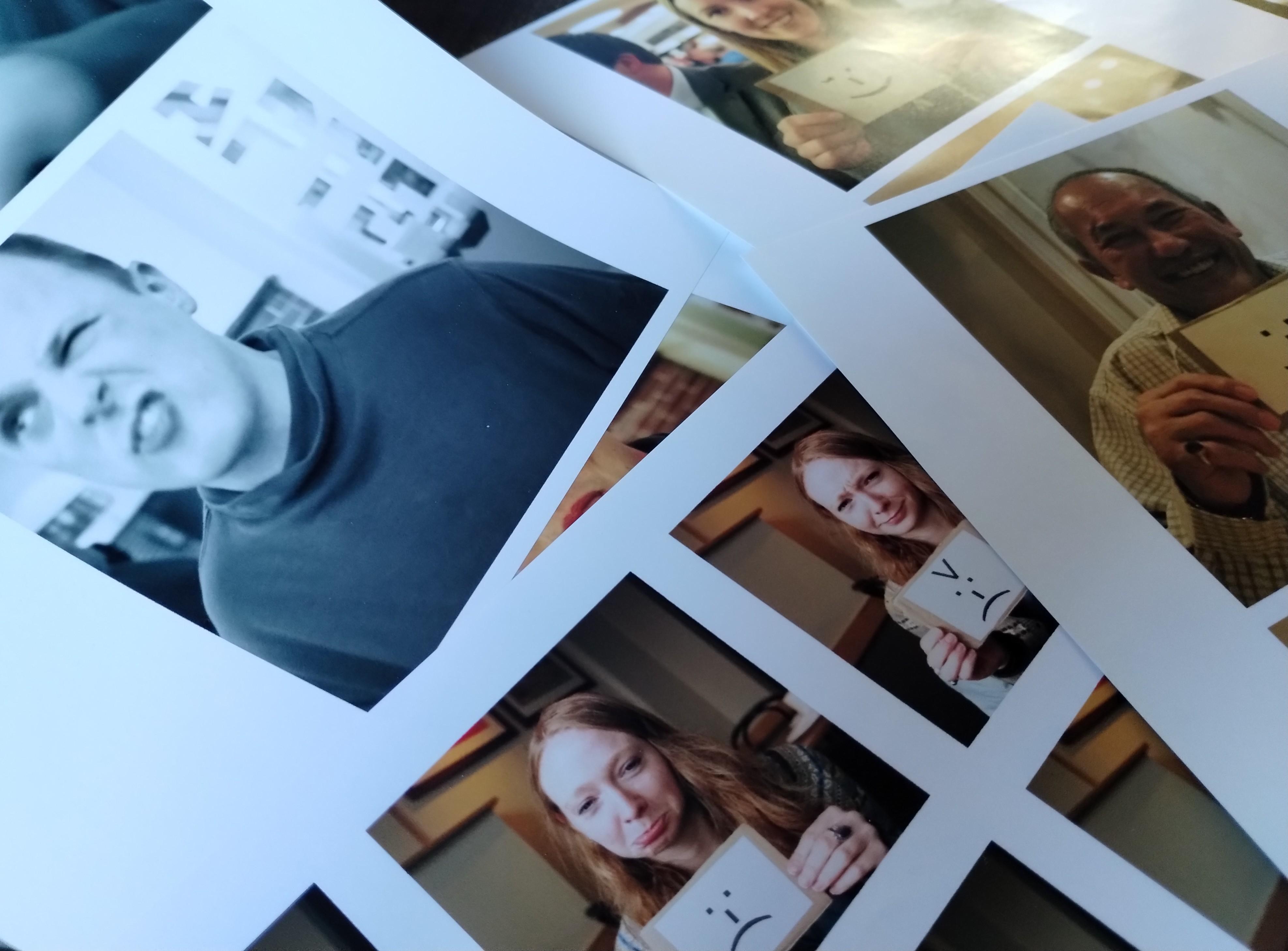
I decided to use it all as an opportunity to practice my active listening skills, using a conceit to push the person whose photo I was taking out of their comfort zone. I printed out a series of eight emoticons (ahhh those days before emojis ruled the roost) and got the sitter to hold the card up and pull the face (display the emotion on the card). After that I’d buy them a coffee and then get them talking about something they cared about and take informal photos, having got them used to the camera snapping away.
It proved a lot of fun and I carried on doing the portraits even after the course had been completed. I’d ask as many questions as I could and really delve into whatever it was that they wanted to chat about after the initial photos had been taken (except the photography process, I found that that didn’t work…). What it showed me was that you can really practice those skills in almost any conversation. Really, really, listening to someone and taking a full interest in what they’re saying, is actually not all that common. So giving it a full go, with your friends at the pub or over a coffee, or with your family, is a great way of building your skills and having fantastic conversations.
I loved the conversations that I had and found out so much about the hundred or so people who I eventually photographed. Testing out my use of silence (stop smirking all those who have met me) and the use of body language to try and put people at ease until it (mostly) became part and parcel of what I do.
